
What does creativity mean in the era of artificial intelligence?
It’s the question that accompanies me every morning from my desk as Creative Director at DUPLO. And, to be honest, it comes with another, more uncomfortable one:
What if AI makes my value, my craft, my judgment, my perspective seem expendable to some?
I don’t say this just for myself. I say it because, historically, everyone has felt entitled to have an opinion about creativity: “use this color,” “change the sentence,” “make the logo bigger…” and now everyone believes they have the ultimate solution simply by saying: “We can do this with AI, right?”
AI is no longer a lab experiment nor a trend: it’s the tool that shortens paths. But it doesn’t replace what distinguishes what is merely good from what truly matters: human sensitivity, that blend of emotion, conflict and intuition that remains exclusively ours.
The Real Impact of AI on Creativity
Over the past two years, AI has burst into agency and brand creative processes with an uncommon level of force. Let’s look at how:
- Shorter Timelines
AI-powered tools can generate copy drafts, visual variations, early storyboards or tone simulations in minutes. A McKinsey & Company report notes that, although almost all companies are investing in AI, only 1% consider themselves “mature” in its deployment. The real leap ahead is not only technical—it’s cultural and strategic.
In the agency world, a Forbes study says 64% of agencies believe generative AI will act as a productivity driver in the next 12 months.
- Delegation of Mechanical Tasks
The artisanal part—painstaking repetition, format adaptations, tone or color adjustments—no longer demands the same manual effort. At DUPLO, we call this “freeing your brain to think”, because when we let AI handle the routine, we can dedicate our energy to what matters most: the idea, the conceptual direction, the strategic tension.
A data point: around 85% of brands and agencies already use AI in at least one aspect of their creative or marketing work.
- Acceleration of Ideation
Early-stage ideation, the phase that once required marathon workshops, can now use AI to design 20 or 30 variations in the time it used to take to produce five. At DUPLO, we’ve seen that this doesn’t make the idea weaker—it makes it sharper. With more options on the table, we must be more rigorous in choosing.
A study shows that human–AI collaboration can improve creative output, though it warns of a drop in diversity when AI dominates the process.
- Risk of Homogenization
Here’s the provocation: AI can produce “ideas” quickly, but many tend to look alike—recycling tones, aesthetics and languages. This is a real danger for an agency whose differential value is originality itself. As a Major Players report points out, 70% of creative professionals believe AI will support their role—yet many fear it may reduce originality.
So yes, acceleration is happening.
The real challenge is not losing what makes us human along the way.
The Point of Authenticity: The Vulnerability of Creatives in the Age of AI
Let me be clear:
AI forces us to reassess ourselves as creatives.
Not because it’s going to replace us, but because it accelerates the “visible” part of creative work, while the truly valuable component—our judgment, our idea, our concept—becomes more exposed.
And that’s where the fear creeps in:
- If I’m no longer spending hours producing, will they still value the thinking behind the work?
- If anyone can generate an image or a piece of copy, will they understand the difference between what is “pretty” and what is strategically meaningful?
AI doesn’t strip creativity.
It strips us.
And although uncomfortable, that’s a good thing. It forces us to raise the bar. To demand more of ourselves.
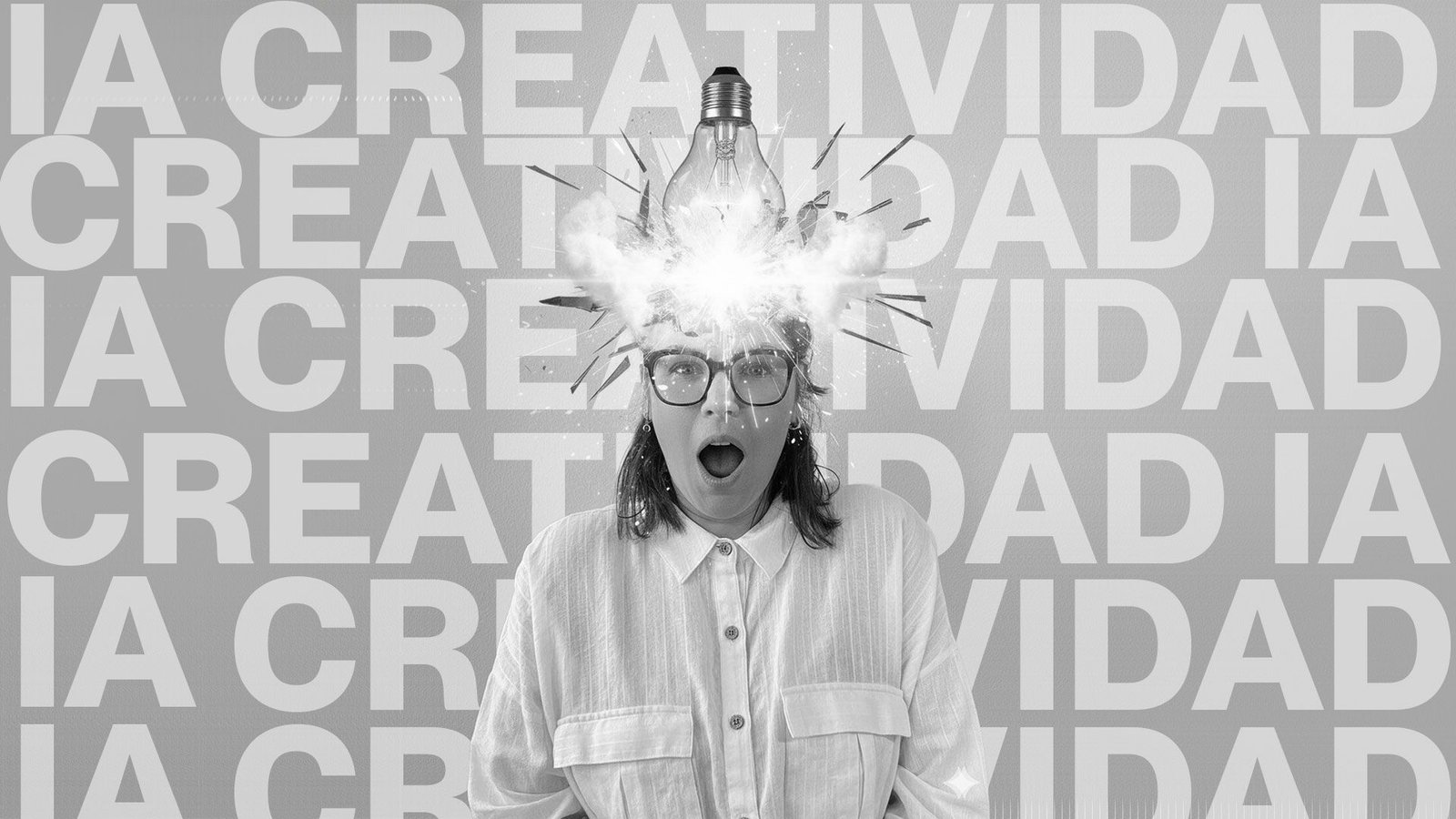
Strategic Vision from My Role as Creative Director at DUPLO
As a hybrid profile—creative and strategic—I clearly see the opportunities this transformation brings for our agency, and also the questions we must answer.
Opportunities for Agencies
First, AI enables agencies to act with greater agility and strategic depth. If we no longer spend as much time producing dozens of pieces, we can invest it in strengthening the “why” behind each decision:
What brand tension are we resolving?
What emotion are we triggering?
What understanding of the consumer do we have that no one else does?
Second, we gain the ability to reach new layers of personalization and micro-segmentation that were previously too costly. A strong idea amplified with AI-generated variations can reach audiences with precision and relevance without losing scale.
This changes the equation:
value = (great idea + measurable execution) rather than high production volume.
Third, AI facilitates quick testing and iteration. What previously took days or weeks can now take hours. At DUPLO, we’re seeing how this opens space to experiment, fail fast, learn and scale.
How the Value We Deliver Is Changing
Here’s a deliberately provocative statement:
Human creativity shifts from being a cost to being the rarest differentiator.
In a world where AI can reproduce styles and executions at speed, what cannot be replicated is:
- cultural intuition
- brand vision
- deep contextual understanding
- the ability to provoke without selling
This will redefine how clients value us. They won’t hire us mainly for “production” (AI does that). They’ll hire us for:
- conceptual direction
- narratives that matter
- creative positioning
- ethical and quality oversight
- bias management and sensitivity
- originality and intellectual property
The Creative Role Is Being Redefined: Less Production, More Conceptual Direction, More Deep Thinking
In my day-to-day work, it’s no longer just about “creating artifacts,” but orchestrating meaning. At DUPLO, the creative who adjusts pixels is giving way to the creative who questions briefings, forms hypotheses, filters what AI proposes and turns it into something with soul.
“AI accelerates the journey, but it doesn’t imagine the destination.”
In practice, when launching a campaign, it’s no longer “let’s generate X versions faster,” but “which version brings us closer to the deep insight and the behavior change we’re seeking?”
AI integration requires us to rethink our value chain:
How do we price strategy?
How do we measure creativity?
What new roles emerge?
Studies suggest the rise of hybrid profiles:
AI Creative Director, Prompt Engineer, Technical Creative.
The Creative Role Evolves
- Less “producing assets”.
- More “directing meaning”.
The creative who adjusts pixels yields to the creative who questions, filters, provokes and thinks deeper.
As I like to say:
AI accelerates the path, but it doesn’t imagine the destination.
Ethics, Intellectual Property and the Future
There’s a conversation we cannot ignore: ethics. Because AI is not just a tool—it’s a mirror. Whatever we put in is reflected back.
- Bias and Reproducibility
AI is trained on past data. If that data contains stereotypes or limited worldviews, AI will replicate them. As agencies, we have a responsibility to intervene, question and correct.
- Intellectual Property
Who signs the idea when AI contributes to the draft? How do we preserve human authorship? At DUPLO, we work with models where AI is part of the process, but the final idea is authored by the team.
- Transparency and Trust
Consumers wonder whether what they see was created by humans or machines—and rightly so. Analyses show that trust decreases when content seems “AI-only.”
- Future Vision
Let me offer two predictions (and one provocative one):
- The line between “creativity” and “engineering” will blur. Understanding prompts, data and systems will be as important as understanding tone.
- The agency that succeeds will be the one that elevates the humanity behind the idea—culture, emotion, pause, conflict. Not because it rejects AI, but because it uses it to amplify the human element.
Provocative:
Agencies that continue charging for production hours like they did a decade ago, without adapting, will become obsolete. As creative leader Chris Duffey says:
“AI isn’t replacing the creative. It’s replacing the creative who doesn’t use AI.”
At DUPLO, we embrace AI as a companion in the journey, not as a passenger taking the wheel. Because here’s how I see it:
AI accelerates, but it doesn’t imagine. Human intelligence still sets the direction.
View this post on Instagram
A combination of AI and manual editing. (DUPLO)
AI is not here to take our jobs.
Our work is more valuable than ever: we are orchestrators of meaning, guardians of sensitivity, leaders of the tension between strategy and emotion. The big idea is still our currency. AI just helps us find it faster.
The future doesn’t belong to the creative who works faster,
but to the creative who thinks deeper.
And at DUPLO, we’re already there.